High-performance encrypted SSDs with hardware security
Fast, secure storage for server, desktop and laptop environments
Kingston encrypted SSDs deliver high-speed performance and hardware-level data protection for server, desktop, and laptop workloads. Self-encrypting drives with AES 256-bit encryption and TCG Opal 2.0 compliance safeguard sensitive information without impacting system speed. Kingston IronKey FIPS certified external storage provides secure backups with multi-password support, dual read-only modes, and touchscreen management. Together, these data security SSDs offer reliable, high-performance storage with end-to-end security for mission-critical and data-sensitive applications.
-

- Data Center SSD for Enterprise
- Gen5 PCIe NVMe U.2
- 3.84TB, 7.68TB, 15.36TB, 30.72TB
- Up to 14,000MB/s Read
- Up to 2,800,000 Read IOPS
-
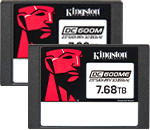
- Optimized for mixed-use applications
- 2.5" form factor
- AES 256-bit Encryption with DC600ME
- 480GB, 960GB, 1.92TB, 3.84TB, 7.68TB
- Up to 560MB/s Read, 530MB/s Write
-
- Supports a full security suite
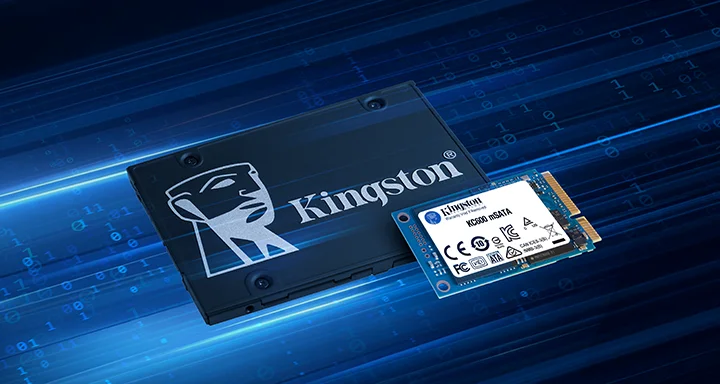
- 2.5" and mSATA
- 256GB, 512GB, 1TB, 2TB
- Up to 500MB/s Read, 520MB/s Write
-
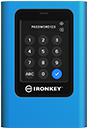
- XTS-AES 256-bit encryption
- USB 3.2 Gen 1
- 960GB, 1920GB, 3840GB, 7680GB
- Up to 250MB/s Read, 250MB/s Write
Key features
Hardware-level encryption for maximum security
Self-Encrypting Drives (SEDs) protect sensitive data with AES 256-bit encryption and TCG Opal 2.0 compliance, maintaining high speed while securing information at the hardware level.

FIPS 197 certification enhances security
Enterprise-grade XTS-AES 256-bit encryption ensures compliance and robust data protection. Built-in safeguards defend against Brute Force attacks and BadUSB, while configurable Admin/User PINs, passphrase modes, and dual Read-Only (Write Protect) options add extra malware protection.

Optimized performance with data security
High-performance PCIe NVMe and SATA SSDs deliver speed, reliability, and end-to-end security, ideal for servers, desktops, and enterprise workloads where both protection and performance are critical.
Encrypted SSDs for comprehensive data protection
Encrypted SSDs combine advanced hardware encryption with compliance standards to safeguard stored data, providing secure, reliable storage for servers, desktops, and enterprise applications.
Frequently asked questions
FAQ: SSD-Encrypted-001
FAQ: SSD-Encrypted-002
TCG Opal is a security standard developed by the Trusted Computing Group (TCG) that defines how self-encrypting drives (SEDs) perform and manage hardware-based encryption and access control. It ensures consistent vendor-neutral features such as automatic data encryption, pre-boot authentication, and secure drive erase, making it easier for organizations to manage and protect sensitive data.
FAQ: SSD-Encrypted-003
The primary distinction between software and hardware-based encryption lies in their implementation and security robustness. Software encryption utilizes the host system's resources to encrypt and decrypt data. While cost-effective and flexible, it is vulnerable to attacks and relies on the host system's security measures.
Hardware encryption, on the other hand, employs a dedicated processor within the encrypted device to handle encryption tasks independently of the host system. This method offers enhanced security by safeguarding encryption keys and critical parameters within the hardware, providing protection against common cyber threats. Combining both encryption methods can provide a robust security strategy for safeguarding sensitive data.
FAQ: SSD-Encrypted-004
Enterprise SSDs deliver consistent speed, endurance, and reliability for servers and data centers. Designed for 24/7 workloads, these drives provide low latency, sustained throughput, and self-encrypting drive technology with AES 256-bit encryption and TCG Opal 2.0 compliance to ensure secure data.
FAQ: SSD-Encrypted-005
External encrypted SSDs are an excellent fit for backups, especially when implementing a 3-2-1 backup strategy. They provide a secure cold storage solution with multi-password support, dual read-only modes, and touch-screen management, while serving as one of your two backup media types. Keep three copies of your data (one primary, two backups), use at least two different media (e.g., an encrypted external SSD and an onsite SSD/NAS storage), and ensure one copy is off-site or in a secure location. This approach hardens your defenses against data loss, ransomware, and other cyber threats.
FAQ: SSD-Encrypted-006