Memory Cards - Blog / Knowledge Centre
-

2D vs 3D NAND: Differences Between SLC, MLC, TLC and QLC Flash Storage
See how NAND architecture and cell design affect endurance, performance, capacity, and cost.
-

Benefits of SD8.0
The SD8.0 differs from its predecessors so greatly a whole new speed class was created for it.
-
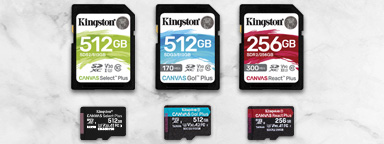
A guide to speed classes for SD and microSD Cards
What does Speed Class C10 mean? What is a UHS Class and V Class? It relates directly to how fast the device needs to write the data.
-

Understanding file systems and drive formatting
Choose the best file system to keep your USB drives, SSDs and SD cards compatible.
-

Choosing a microSD card for your Nintendo Switch
It comes with 32GB of internal storage, expandable with a microSD card that will hold more games. But how do you pick a card?
-

Get to know the features of the Kingston Industrial cards
There are many features in Kingston’s Industrial cards like bad block management and wear levelling.
-

The best storage options for creatives and when to use them
Here we look at the best storage options for creatives - memory cards, SSDs, HDDs and the cloud.
-

Choosing storage for your Android device
First, look for Class A1 or Class A2 markings. As for capacity, microSD cards can hold up to 512GB of storage.
-

Choosing storage for your dashcam
Storage is a crucial part when using a dashcam and high-endurance cards are designed especially for heavy use.
-

A Kingston gift guide for STEAM students
Here are some tech gift ideas for the STEAM students in your life.
-

The Kingston Workflow Station makes things easy for content creators and video professionals
Learn how the Kingston Workflow Station can make file transfers out in the field faster for professionals.
-

How to choose a memory card for shooting 4K video
Flash memory cards (SD or microSD) for capturing 4K video need to have the right card capacity, write speed, data transfer speed and video speed.