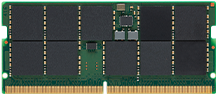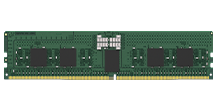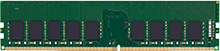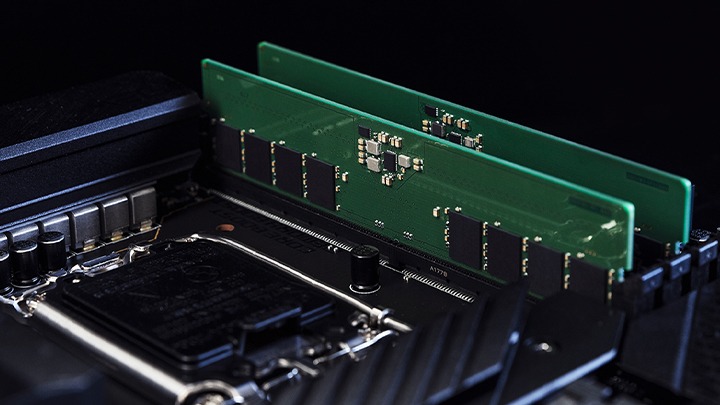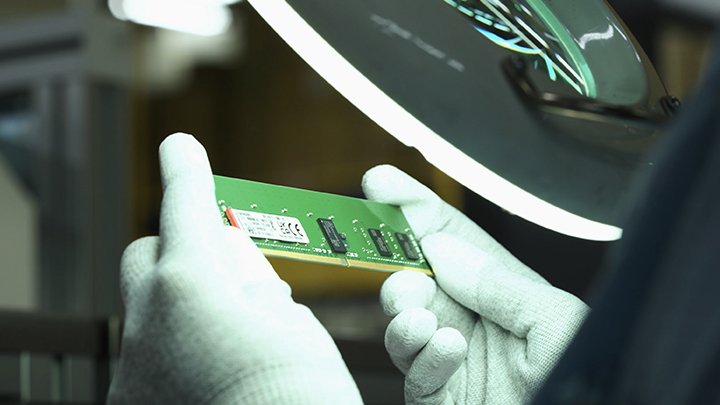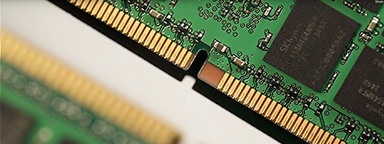
The reason DDR5 server memory is important for data centers is that today’s infrastructure has to process far more data than ever before. From cloud platforms and hybrid environments to edge computing and AI-driven workloads, the pressure on servers is increasing every year.
To keep up, data centers need memory technology that offers higher bandwidth, improved power efficiency, and stronger data integrity than DDR4 systems. DDR5 delivers on all three, offering higher capacity modules, faster data rates, and the efficiency improvements needed to keep data center operations running smoothly and cost-effectively.
What are the key benefits of DDR5 over DDR4?
In a data center, the shift from DDR4 to DDR5 delivers specific gains that directly improve how servers handle data and workloads. DDR5 introduces several key advantages for servers compared to older DDR4 memory.
Improved performance and bandwidth
The most significant improvement in DDR5 over DDR4 is performance and bandwidth. DDR5 doubles the available data rate, reaching up to 6400MT/s compared to DDR4’s 3200MT/s, which means higher memory bandwidth per CPU core. This increased throughput enables servers to handle demanding workloads such as memory databases, cloud-native applications, and storage-intensive tasks with faster access speeds and reduced latency.
Power and data integrity
Another major advantage DDR5 memory has over DDR4 memory is better power efficiency and improved data reliability. DDR5 operates at lower power consumption and includes on-module power management. It also adds on-die error correction to strengthen data integrity which improves stability even in high-density DDR5 modules, critically important for servers that manage large amounts of data continuously.
Scalability
A single server can now support significantly higher total memory capacity with DDR5 than with DDR4 systems, thanks to the DDR5 modules being available in higher densities. This scalability is vital for applications like AI training, edge computing, and hybrid cloud platforms where workloads are growing quickly. By combining higher capacity with faster speeds, DDR5 ensures the infrastructure can keep pace with both current and future demands.