When it comes to buying a new gaming PC, the choices can feel overwhelming. There are countless models, specs, and price points to consider, and the wrong decision can leave you frustrated. But it doesn’t have to be complicated. Whether you’re chasing high frame rates, crisp graphics, or a system that can handle both gaming and content creation, understanding the key factors that make a great pre-built gaming PC will save you time and help you get straight to the fun part: playing.
In this guide, we’ll explain what really matters when choosing a pre-built gaming PC, performance expectations, how to balance cost with value, and which components affect future-proofing, so you get the best system for your needs.
Why choose a pre-built gaming PC?
When you start thinking about getting a new gaming PC, the same question always comes up: should you build one yourself or buy a pre-built system? Both options have advantages, the right choice depends on your budget, what you need the PC for, and how comfortable you are with hardware.
Building a PC can be a great experience, giving you full control over every component. It just requires time, research, and enough technical confidence to avoid common PC build mistakes. Pre-built gaming PCs on the other hand can offer value, convenience, reliability, and peace of mind:
- You get a system that’s ready-to-go the moment you plug it in with components that have already been tested together for performance and stability.
- You avoid compatibility issues, assembly steps, and the wait for multiple parts to arrive. It’s a straightforward path to getting into your games quickly and reliably.
- Pre-built PCs usually come with a manufacturer warranty and customer support. If something goes wrong, you’re covered.
- They often include optimized drivers, pre-installed operating systems, and sometimes even useful gaming utilities.
So, if you value simplicity, guaranteed performance, and support, a pre-built gaming PC is a smart choice.
Setting your budget & use case
Before you start browsing pre-built gaming PCs, it’s important to know what you need from your system and how much you’re willing to spend. Your budget and intended use will largely dictate which components matter most and how much power you really need.
- Define your gaming style: Are you mainly playing competitive esports titles? Or do you want to dive into AAA games at ultra settings? Maybe you’re planning to stream or create content too. Each scenario demands different hardware, and different price points.
- Gaming resolution: Think about the monitor and games you want to play. A system that runs 1080p games without issues might struggle at 1440p or 4K if you don’t invest in a higher-performing GPU.
- Budget ranges: Pre-built PCs come in all price brackets and performance levels. Budget systems can handle most games at 1080p with decent settings. Mid-range options are ideal for higher resolutions like 1440p and optimized frame rates. High-end systems target 4K gaming, VR, or content creation.
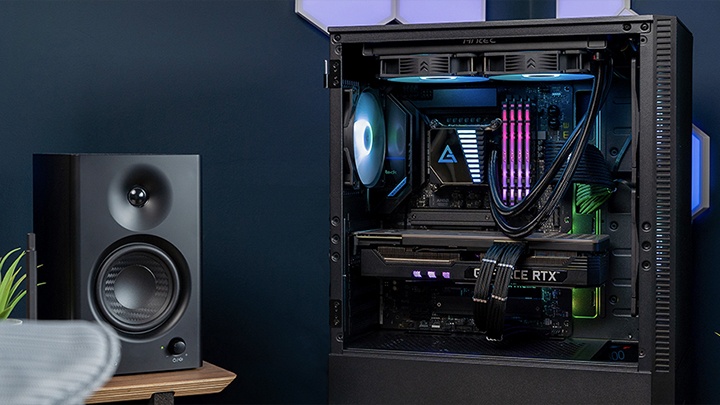
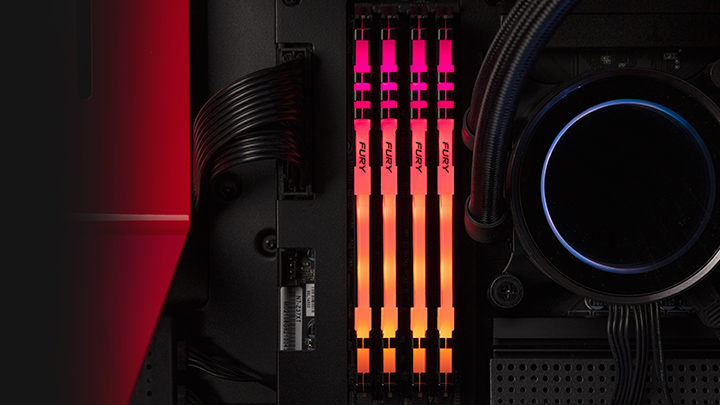
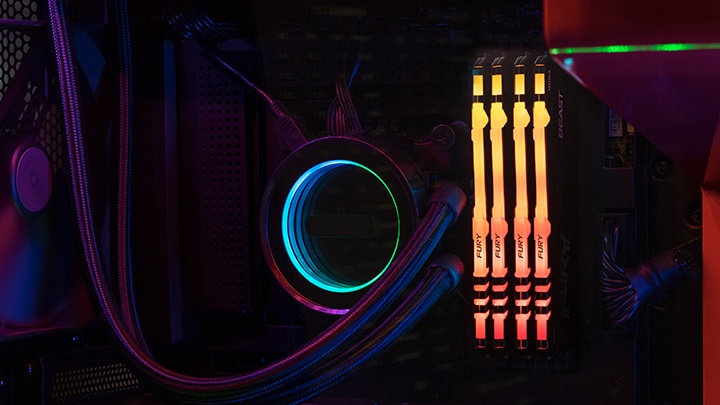
- Balance performance vs extras: Fancy RGB lighting and premium cases look cool and can transform your standard PC build into a colorful and unique masterpiece. But RGB comes at an additional cost, so it’s best to prioritize performance first for a smoother gaming experience.
Define your budget and use-case early to have a clear roadmap for which pre-built systems are worth considering, and which might be overkill or underpowered for your needs.