Solid-state drives are known for their speed, their compact form factors, and near-silent operation compared to the spinning platters of their mechanical predecessors, hard disk drives. However, due to the limited lifespan of the flash cells that comprise SSDs compared to the virtually unlimited write endurance of HDDs, some may express concern about the lifespan of SSDs in comparison to HDDs.
There are certainly differences between the two technologies. Both have limited lifespans in different ways. SSDs fail gradually as flash cells degrade, with lifespans measured in Terabytes Written (TBW), and Program/Erase (P/E) cycles. SMART (Self-Monitoring, Analysis, and Reporting Technology) data makes this process trackable and predictable. HDDs, on the other hand, fail suddenly due to mechanical failure, which is less predictable. Their lifespan is measured in power-on hours and Mean Time Between Failures (MTBF). and Program/Erase (P/E) cycles. SMART (Self-Monitoring, Analysis, and Reporting Technology) data makes this process trackable and predictable. HDDs, on the other hand, fail suddenly, due to mechanical failure, which is less predictable. Their lifespan is measured in power-on hours and Mean Time Between Failures (MTBF).
HDDs’ vulnerability to mechanical failure is compounded by their relative fragility. SSDs, however, are far more resilient to physical shock and vibration, as they lack the moving parts inherent to hard drives.
Experimental testing has shown that, while operating, a modern SSD can withstand shocks of up to 1500G, while HDDs’ resistance caps out between 70 and 80G. This means SSDs are approximately 20 times more resilient while in operation. Additionally, the limited write endurance of NAND flash is mitigated by wear-leveling algorithms within the drive’s firmware, which distribute writes evenly across all flash cells. In typical consumer workloads, these protections allow an SSD to outlast the usable lifespan of the system in which it is installed.
Failure rates of SSDs and HDDs
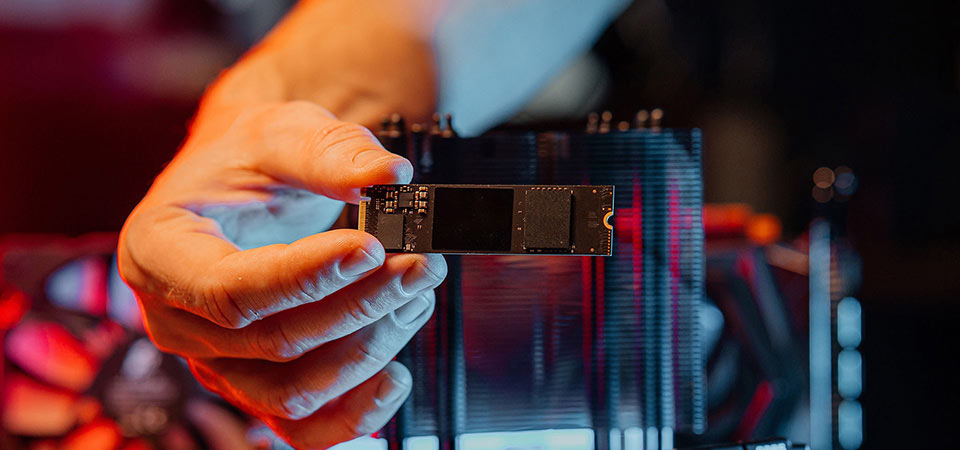
As mentioned, an SSD’s lifespan can be monitored via SMART data. Kingston’s SSD Manager, or other tools like CrystalDiskInfo can assist in monitoring your Kingston drive’s remaining life expectancy based on TBW usage., or other tools like CrystalDiskInfo can assist in monitoring a drive’s remaining life expectancy based on TBW usage.
With these innovations, a contemporary SSD has an average lifespan of 8 years, with an AFR (Annualized Failure Rate) of 0.9% compared to 4 years and a 1.7% AFR for a hard disk drive. In other words, SSDs are 47% less likely to fail and typically experience a lifespan double that of an HDD.
Drives fail eventually. However, the risks can be mitigated through the prudent selection of hardware and the consistent use of backups.